

After six fantastic years with BrightPlanet, I am no longer an employee (CTO) of the company nor chairman of the Board. I felt the company should go in one direction; the Board felt otherwise . . . . Such events, while not prosaic, are also not uncommon. I wish the company all possible success. It is now time to move on. . . . 
Even though comparatively small, BrightPlanet is being challenged, as are all software companies today, in managing the transition to (still another) brave new world. Think about the major generational shifts of the past 15 years: personal computers, local networking, Internet browsers and thin clients, Internet ubiquity, open source, now Web 2.0. Certainly other items could be listed in that progression, but the general point remains that the pace of software and computing technology development has been furious and relentless.
These challenges are huge, and have resulted in technology shifts literally measured in months, not years. It is not for small reason that today’s buzzwords include agile, productive and efficient. My goodness, as few as eight years ago, choosing to commit to Java for production-scale enterprise development was considered by some risky and radical; today, some may argue that Java is becoming passé and dynamic languages such as Ruby and DSLs such as Rails hold the keys to the future.
Young Turk to Old Fart
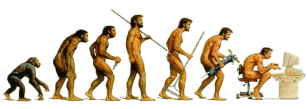
I laugh now about that (truly) instantaneous moment when one morphs from being a Young Turk to an an Old Fart. (I myself passed that breakpoint long ago.) I remember with pride having the Y.T. moniker when in my teens and twenties. We see it still today. One of the things, however, that has blown my mind in the past 5-6 years is the age of the next successful generation. Look at the ages of Brin, Page, Ross, Cannon-Brookes, Farquhar, Hansson, and many others (please forgive me if your name is not on the list), who are (or will be) hauling down some serious dough at very young ages. Now, as an older guy (‘Old Fart’), I have to ask myself whether I can play in this new game. (I guess the best that I can say in that regard is that the world is not populated entirely with my daughter’s friends, but all of us can learn from this newest generation more efficient and agile ways of doing the old tasks.)
The Horizon Ahead
The horizon ahead is one of those places where I truly think I DO have a clue. When one sees multiple major shifts of stuff over many years, it is not too difficult (though some may miss it) to see some major trends. I don’t have the time (nor inclination nor luck nor skill) to write another Peter’s In Search of Excellence, the biggest business book of all time, even assuming I could write that simply or hit the lottery. But, a close reading of trends suggests the pending convergence of open source, semantic tagging and mediation, interoperability, agile development, social collaboration, and mechanisms to assign authoritativeness to information. This convergence will be democratic with a small D, disruptive and rapid. Fasten your seat belts . . . .
Trying ‘Web Scientist’ on for Size
As for myself, I am now on my own and not running a company for the first time in 12 years. I am striking out more directly into the semantic Web — directions that have clearly been my passion on this blog over the past few months. Though I have taken up the obligatory consultant shingle (after all, we all must eat) for the time being, I have also taken on the moniker of ‘Web Scientist’ on my new email signature.
As the person who first explicated and coined the term “deep Web”, the person who wrote the Web’s most popular search tutorial in its early years, and the person who helped bring into being many of the automation techniques and bots for accessing dynamic Web content, I feel pretty comfortable with that label. I also especially like that TBL and others have put a marker out there to give the title some legitimacy. (See Creating a Science of the Web by Tim Berners-Lee, Wendy Hall, James Hendler, Nigel Shadbolt and Daniel J. Weitzner in Science 313(11), 11 August 2006.) (See also this recent NYT article.)
I’ll now see how it feels to have the Web scientist label for a while.
For those of you who have been faithful readers since I put this blog out now more than a year ago, you know that my abiding passion has been effective information use and management in relation to the Internet. I look forward to further discussions with you on these very same topics in the months ahead.

Wow, what a great title. I’m a web scientist of sorts as well. And, as I age and discover how the Web 2.0 world will be adopted by others, I also see myself as an evangelist for change — a structured content and interoperability evangelist. After all, Web 2.0 and the promises of the Semantic Web aim to make “good enough” a thing of the past.
Thanks for all the good work you do. I really enjoy your blog.
Scott Abel
Content Management Strategist
TheContentWrangler.com